Fast Banking and Deposit Methods at Prive Casino
Updated November 2026
Licensed
 Available in GB
Fast payouts
18+ Only
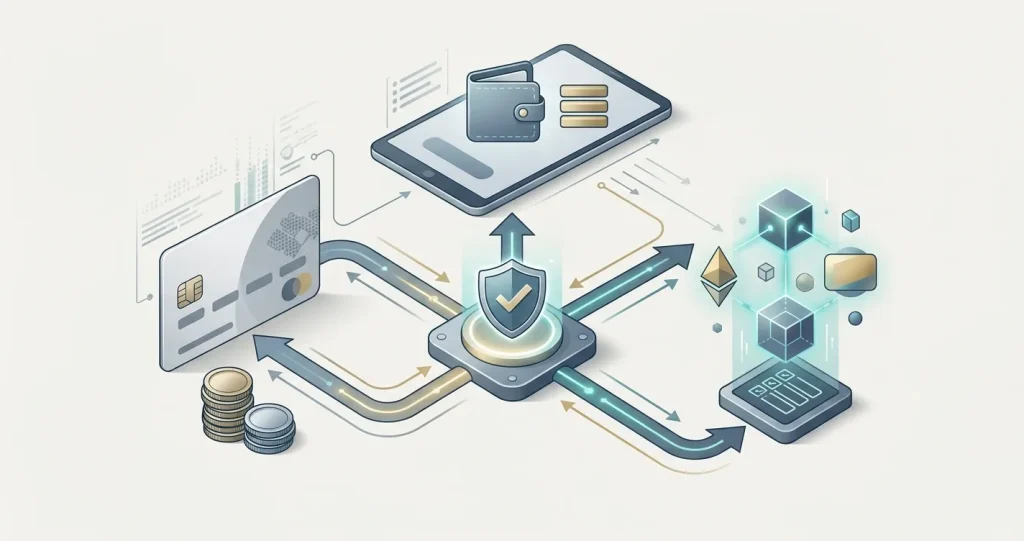
Prive Casino supports several payment categories, including Visa and Mastercard cards, Skrill and Neteller e-wallets, and cryptocurrencies such as Bitcoin, Ethereum, Litecoin and USDT. For UK readers, the useful decision is not which logo looks most convenient but which route fits your own account, currency and eventual withdrawal plan. Deposit availability does not automatically prove that the same method will be used for cashing out, and Prive’s account controls include KYC identity verification. Payments are best treated as a routing decision: confirm the method shown in your cashier, use an account you control, understand any currency conversion before confirming, and keep withdrawal conditions separate. Detailed payout processing belongs on the dedicated Prive Casino withdrawals page. Before making a deposit, it is crucial to understand the Prive Casino withdrawal process and KYC requirements to avoid unnecessary delays.
Table of Contents
- Supported Deposit Options and Payment Limits at Prive Casino
- Visa and Mastercard
- Skrill and Neteller e-wallets
- Bitcoin, Ethereum, Litecoin and USDT
- KYC is part of the payment journey
- Deposit method and withdrawal route can differ
- How currency affects a UK player
- Do not assume a payment method is fee-free
- Payment choice and bonuses are separate decisions
- A practical payment-method checklist
- Cards vs e-wallets vs crypto: how to choose
- Mobile payment use
- When account setup affects payments
- How the payment mix works in practice
- FAQ
Supported Deposit Options and Payment Limits at Prive Casino
Prive supports three broad payment groups. Card payments include Visa and Mastercard. E-wallet support includes Skrill and Neteller. Crypto support includes Bitcoin, Ethereum, Litecoin and USDT. These categories give players several ways to fund an account without forcing every user into the same banking route.| Category | Examples | What to check before using it |
|---|---|---|
| Cards | Visa, Mastercard | Card ownership, currency, cashier availability and later withdrawal routing |
| E-wallets | Skrill, Neteller | Wallet ownership, account details, currency and cashout support |
| Cryptocurrency | Bitcoin, Ethereum, Litecoin, USDT | Correct asset, network details where shown, exchange-rate exposure and account verification |
Visa and Mastercard
Visa and Mastercard are among the verified Prive Casino payment options. Cards are familiar to many players because they connect directly to an existing banking relationship and do not require a separate wallet account. The convenience, however, can make it easy to overlook practical details that matter later. First, use a card in your own name and check that the cashier accepts it for the transaction you want to make. Second, look at the currency shown before confirming. If your card account and the casino transaction use different currencies, your bank or card provider can apply conversion at its own rate or fee structure. No universal conversion cost is assumed because it depends on the user’s provider. Third, do not assume that a successful card deposit proves the exact route of a future withdrawal. Operators can apply payment-routing rules, account checks or method restrictions at cashout. The correct time to confirm that is before depositing, especially if keeping payments and withdrawals simple is a priority.Skrill and Neteller e-wallets
Skrill and Neteller are verified e-wallet options at Prive Casino. An e-wallet can act as a separation layer between a casino account and a primary bank account, which some users find useful for organising gambling spending. It also gives you a dedicated account record for incoming and outgoing transfers. The key requirement is ownership and consistency. Use a wallet account that belongs to you and make sure the personal information used for payments matches the information on your casino account. A wallet is not a way to bypass identity checks. KYC remains part of Prive’s account and withdrawal controls. Before using an e-wallet, check the wallet’s own fees and currency rules as well as the casino cashier. A method can be supported by the casino while the wallet provider applies its own charges for funding, exchange or withdrawal. Those external costs are not controlled by Prive, so they should be checked directly with the payment provider.Bitcoin, Ethereum, Litecoin and USDT
Prive Casino also supports cryptocurrency payments, including Bitcoin, Ethereum, Litecoin and USDT. Crypto can be useful for users who already hold digital assets and understand wallet transfers, but it introduces different risks from a card or e-wallet. The first is price movement. Bitcoin, Ethereum and Litecoin can change value between acquisition, deposit and any later conversion. USDT is designed to track a fiat value more closely, but that does not remove network, platform or wallet considerations. A casino balance and a crypto wallet balance are separate things, so do not assume that using crypto eliminates currency exposure. The second is transaction accuracy. Crypto transfers can be difficult or impossible to reverse once sent. Always copy the address or payment instructions exactly as shown in the cashier and confirm the correct asset and network where the interface specifies one. Network support or chain options should be confirmed in the cashier rather than inferred. The third is verification. Crypto is a payment method, not an exemption from account controls. Prive uses KYC, so choosing Bitcoin or USDT does not mean identity verification disappears.KYC is part of the payment journey
Identity verification is part of Prive Casino’s account and withdrawal controls. That is important to understand before depositing because payment convenience at the funding stage is not the same thing as an unrestricted cashout process later. No specific document checklist or guaranteed verification time is stated. Those details should come from current official account instructions rather than third-party summaries. The safe practical assumption is simply that KYC can be required and that the account holder should be ready to verify identity through the casino’s current process. Using payment accounts in your own name reduces avoidable friction. Name mismatches, third-party payment instruments or inconsistent account details can create extra review even when the underlying method is supported.Deposit method and withdrawal route can differ
One of the most common payment mistakes is to treat the deposit button as proof of the entire money flow. A casino cashier can display a method for deposits while applying different rules to withdrawals. The receiving route can depend on account verification, prior deposits, method eligibility and the operator’s payment controls. For that reason, check two things before funding the account: whether your chosen method appears in the deposit cashier and whether the withdrawal section explains how money can be returned. If the same route is not available, you should know the alternative before committing funds. The dedicated Prive Casino Withdrawals guide handles cashout-specific processing. Keeping that topic separate prevents stable method availability from being mixed with more volatile limits, fees and payout times.How currency affects a UK player
A UK-facing casino may present sterling-oriented content, but the payment account you use still controls part of the final cost. A Visa card in GBP, a Skrill balance in another currency and a crypto wallet all create different conversion paths. Before confirming any deposit, compare the transaction currency shown by the cashier with the currency of your funding source. If they differ, identify where conversion happens and who sets the rate. It might be the payment provider, wallet service, card issuer or exchange used before the casino transaction. Because those rates change, fixed amounts are not converted into a universal percentage cost. Keeping one main gambling currency can make record-keeping simpler. It helps you compare deposits and withdrawals without mentally mixing exchange-rate movements with actual gambling results.Do not assume a payment method is fee-free
Prive supports the named payment methods, but that does not establish a universal zero-fee claim. A transaction can involve fees at several layers: the casino, the card or wallet provider, a crypto exchange, or a blockchain network. The absence of a visible fee in one layer does not prove the whole route is free. The best practice is to review the amount that will leave your account and the amount that will arrive before confirming. For crypto, also consider network costs and any exchange spread you incur when buying or selling the asset. For cards and e-wallets, check provider-side currency or service charges. This approach avoids the common error of labelling a method “free” based on one operator table while ignoring external provider costs.Payment choice and bonuses are separate decisions
A payment method can be perfectly suitable for ordinary deposits but interact differently with a promotion. Some casinos exclude certain methods from particular offers or set promotion-specific conditions. Do not assume that every Prive payment method qualifies for every bonus. If you intend to claim a promotion, read the current offer terms first and use the Prive Casino Bonuses and Promotions guide for the promotional side of the decision. Choose a payment method only after confirming that it does not conflict with the offer you actually want. That separation is important because otherwise players can optimise for payment convenience and accidentally choose a route that does not fit the bonus rules they had in mind.A practical payment-method checklist
- Open the current cashier and confirm that the method is available on your account.
- Use a card, wallet or crypto account that you control.
- Check the transaction currency and any provider-side conversion cost.
- If using crypto, verify the asset and network instructions shown by the cashier.
- Confirm how withdrawals are handled before you make a substantial deposit.
- Expect KYC to remain relevant regardless of the payment category.
- If a bonus is involved, check whether the payment method is eligible under the current terms.
- Keep your own transaction records so deposits and withdrawals are easy to reconcile.